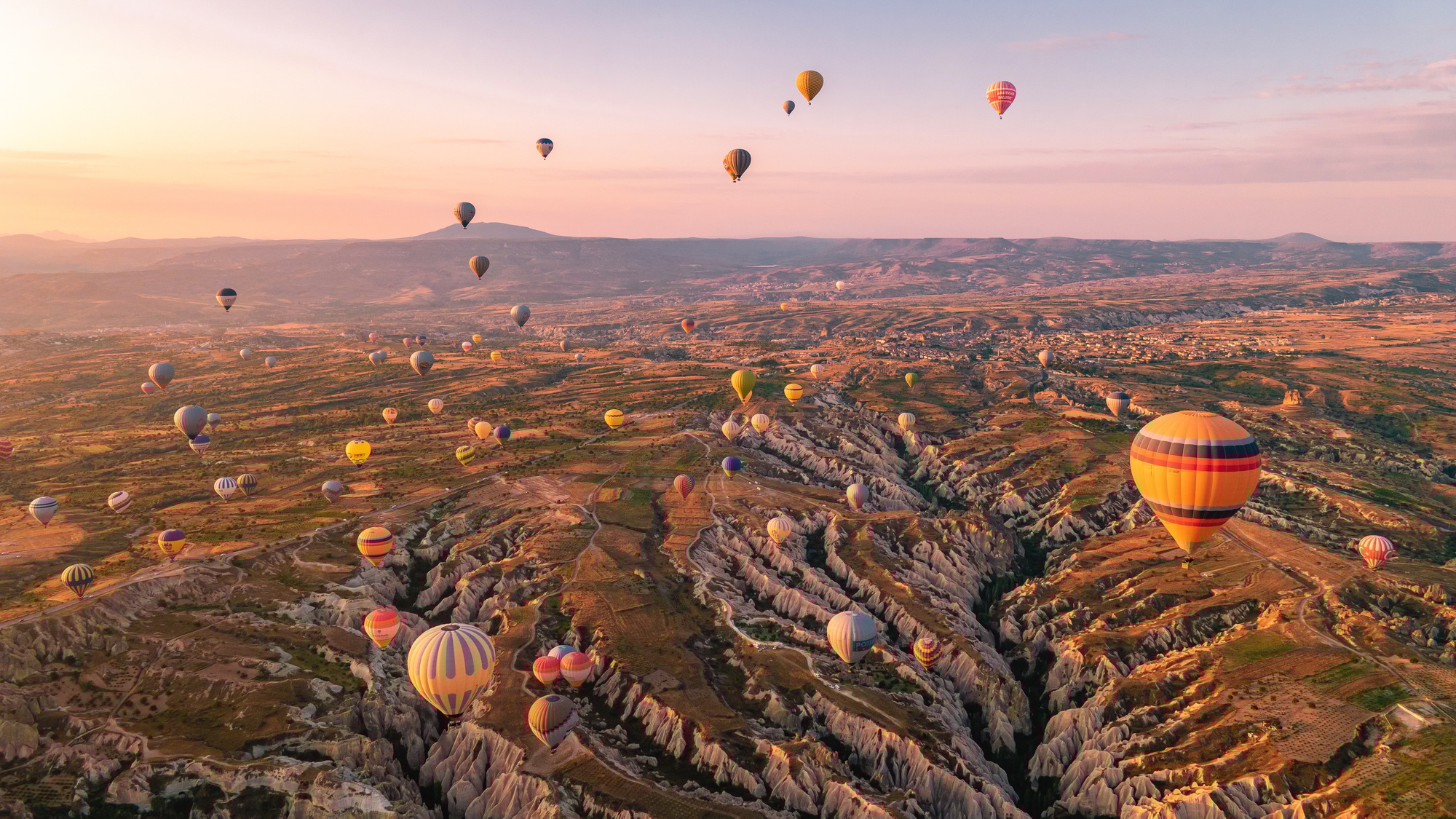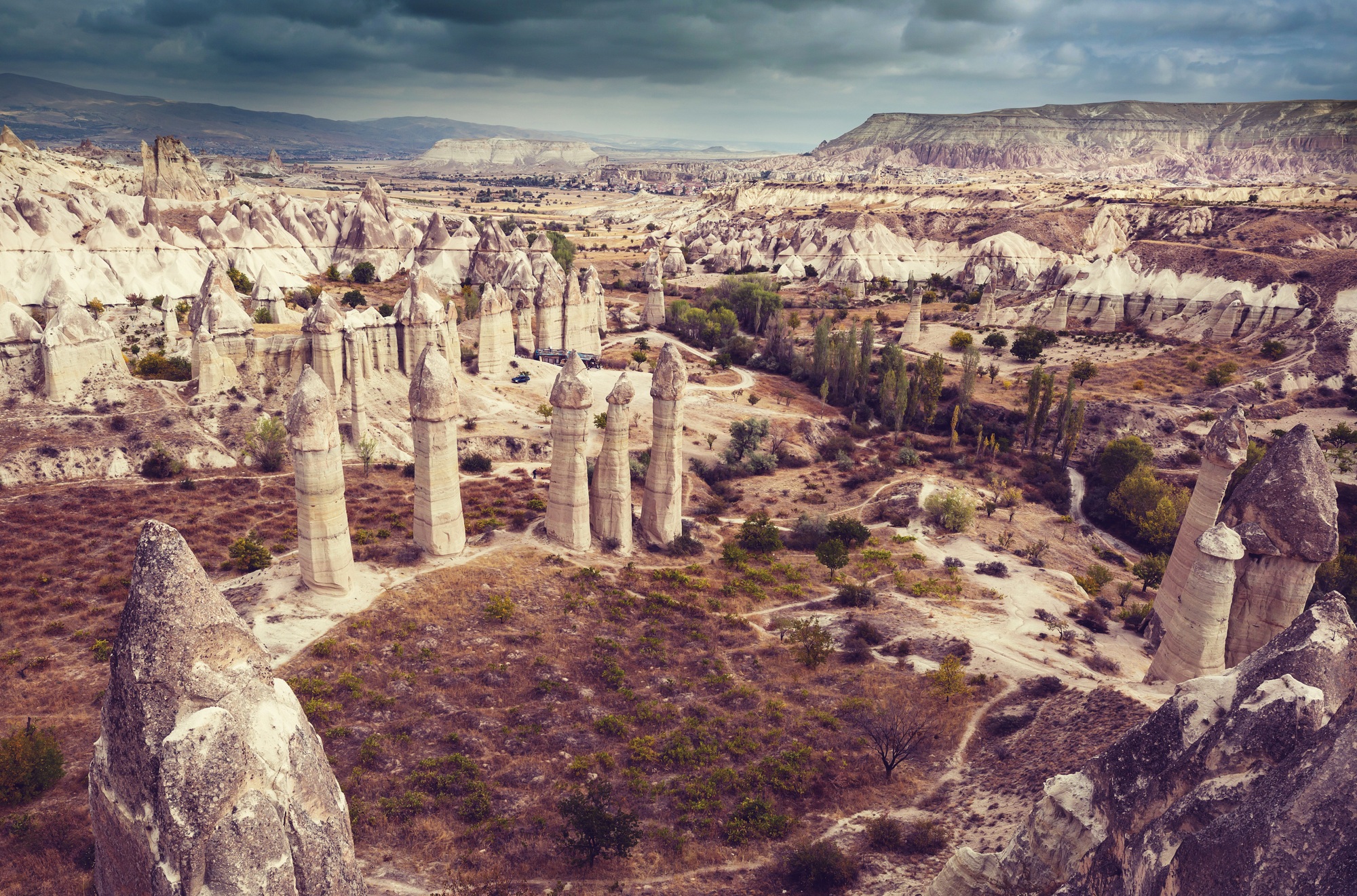
Cappadocia is doable without a rental car, but the public network here is humbler than guidebooks make it sound. There's no metro, no app to summon a ride reliably, and no single ticket that covers everything. What you do have is the dolmuş — a shared minibus that loops between the main villages — plus the regional bus hub in Nevşehir and airport shuttles. Learn those three things and you can reach almost every sight on a budget.
The catch is timing and geography. The towns sit a few kilometres apart (Göreme to Ürgüp is about 7 km, Göreme to Avanos about 10 km, Göreme to Uçhisar about 4 km), but many of the famous valleys and the underground cities aren't on any minibus route at all. So the honest answer is: public transport gets you between towns cheaply; reaching the scenery often still needs a taxi, a tour, or your own two feet.
The dolmuş: your main lifeline
A dolmuş is a shared minibus that runs a fixed route and leaves when it's reasonably full or on a loose schedule. You flag it down or board at a stop, tell the driver where you're going, and pay in cash, in Turkish lira. There are no euro fares — anyone quoting you a price in euros for a dolmuş is guessing. Fares are small (a single leg is roughly small and paid in Turkish lira, but they move with local inflation), so carry coins and small notes and keep change handy.
The backbone routes most visitors use:
- Göreme ⇄ Çavuşin ⇄ Avanos — the main tourist line, useful for reaching Avanos pottery workshops and passing Çavuşin on the way.
- Göreme ⇄ Nevşehir ⇄ Ürgüp — connects the two biggest towns via Nevşehir; this is how you reach Ürgüp's centre and onward connections.
- Nevşehir ⇄ Göreme — the link between the regional bus hub and your likely base in Göreme.
Frequency is decent in summer — often several departures an hour on the busy stretches — but it thins out badly in the off-season. In winter some routes run less than once an hour, and the last minibus of the day can leave surprisingly early. Always ask a driver or your hotel for the last dolmuş time if you're heading out in the afternoon, especially anywhere quieter than Göreme.
Rule of thumb: the dolmuş connects towns, not viewpoints. If your destination is a valley trailhead or an underground city, plan a taxi or a tour for that leg.
Nevşehir otogar: the hub you'll pass through
Nevşehir is the regional capital and its otogar (bus station) is the hub for intercity coaches and many regional minibuses. If you arrive by long-distance bus from Istanbul, Ankara, Konya or the coast, you'll likely land here. The important thing to know: there's usually no single direct intercity bus to Göreme — you arrive at Nevşehir and connect onward by dolmuş or by a shuttle the bus company often runs (a servis) into the surrounding villages. Ask at the company's desk when you buy your ticket whether a servis to Göreme/Ürgüp is included; many provide it free.
On the intercity coaches themselves, Turkish operators like Metro Turizm do run a tea (çay) and snack service with a steward on the longer hauls. Don't expect reliable onboard Wi-Fi on the routes serving Cappadocia — treat that as a bonus if it works, not a given.
Getting in from the airport
Two airports serve the region, and neither is walking distance from anywhere you'll stay:
- Nevşehir Kapadokya (NAV) — the closer one, roughly 40 minutes to Göreme.
- Kayseri Erkilet (ASR) — bigger, with more flights, but about 75 minutes to Göreme.
Most visitors prebook a transfer rather than improvising. Shared airport shuttles run to meet flights and drop you at your hotel for a per-person fare; a private transfer costs more but takes you door-to-door on your schedule. Prices are quoted and paid in lira and vary with the season, fuel, and how far your hotel is — confirm the figure and the pickup arrangement in writing when you book, particularly for early or late flights when public options have stopped. If you land at Kayseri, factor in that longer 75-minute drive.
Taxis and ride-hailing
Uber operates in Turkey — notably in Istanbul through licensed taxis — but in the Cappadocia region ride-hailing coverage is thin and you generally can't count on summoning a car on demand. In practice you'll use local taxis: have your hotel call one, or pick one up at a town centre rank. Agree the fare or confirm the meter is running before you set off, and keep enough lira in cash, since not every driver takes cards. Taxis are how most people reach the spots the dolmuş skips — the underground cities, valley trailheads, sunrise viewpoints.
Reaching the underground cities and valleys
This is where public transport gets weak. The big underground cities sit south of Nevşehir and aren't a simple hop from Göreme:
Sights the dolmuş won't drop you at
Derinkuyu is the deepest of Cappadocia's underground cities, descending some eight levels and once capable of sheltering thousands of people along with their livestock. We picked it for the sheer scale and the engineering: ventilation shafts that still draw fresh air, a deep well, communal kitchens, a church and the famous rolling stone doors that locked each floor from the inside. Part of the UNESCO landscape, it's a genuinely jaw-dropping feat of ancient survival architecture. Go with a guide to understand what you're seeing, bring a layer for the cool air, and be honest with yourself about the steep, narrow, low descents if you don't love enclosed spaces.
View on map →Kaymaklı Underground City is one of Cappadocia's astonishing subterranean towns, a multi-level warren of carved tunnels, stables, kitchens, wine presses and chapels where whole communities sheltered from raiders. We picked it over its deeper neighbour Derinkuyu for travellers who find tight, low passages a little less daunting, its galleries feel wider and more navigable. It's part of the same UNESCO World Heritage landscape and just as atmospheric, with the great round stone doors that once sealed each level. Bring a light jacket, it's cool below, and skip it if you're strongly claustrophobic, as the connecting tunnels are genuinely low and narrow.
View on map →Ihlara Valley is Cappadocia's great green escape, a roughly 14-kilometre canyon cut by the Melendiz river, its walls lined with shady poplars and dozens of rock-cut Byzantine churches still bearing frescoes. We picked it as the antidote to the dusty plateaus: cool, leafy and full of birdsong, with the river running beside the trail the whole way. The classic walk is the shorter middle stretch from Ihlara village down to Belisirma, a flat couple of hours past the most painted churches, with a riverside cafe to rest at. It's about an hour by car from Göreme, so pair it with Derinkuyu or Selime on a south-Cappadocia day.
View on map →Prices and ratings shown are pulled live from our maintained Cappadocia venue database and update automatically.
Reaching Derinkuyu or Kaymaklı by minibus means connecting through Nevşehir, and onward service can be infrequent — if you go late and the return minibus has stopped, you can genuinely get stranded in a small town after dark with no easy ride back. For these, most people take an organised tour (the classic "Green Tour" bundles Derinkuyu or Kaymaklı with Ihlara Valley) or hire a taxi for the day. The valleys around Göreme — Pigeon, Love, Red, Rose — are best reached on foot or by a short taxi to the trailhead, not by bus.
Town-centre sights you can reach on foot or by short dolmuş
The Göreme Open-Air Museum is Cappadocia's single most important sight and a UNESCO World Heritage site, a cluster of rock-cut Byzantine churches and monasteries carved into the tuff between roughly the 10th and 12th centuries. We picked it because the frescoes here, especially in the Dark Church (Karanlık Kilise), are among the best-preserved in the region thanks to the little light that reached them. Go early, before the tour buses, and budget the small extra ticket for the Dark Church, it's worth it. Wear proper shoes for the uneven rock steps and give yourself a couple of hours to take it slowly.
View on map →Uçhisar Castle isn't a castle in the usual sense, it's the tallest rock outcrop in Cappadocia, honeycombed with tunnels and rooms and once used as a natural fortress and refuge. We picked it for the view: from the top you get one of the finest 360-degree panoramas over the whole region, with the valleys fanning out and Mount Erciyes on the horizon. Climb up for sunset, when the tuff glows gold and the village below softens, it's one of the most romantic moments in Cappadocia. The final stairs are steep and exposed, so take it steady and bring a layer for the wind at the top.
View on map →A dramatic stone tower carved from volcanic rock, rewarding a steep climb (chains and railings help) with sweeping views of fairy chimneys and valleys—and mercifully fewer crowds than Uçhisar. We send view-chasers and hikers here who want the panorama without the tour groups; plan 30–60 minutes and pack sturdy shoes.
View on map →Prices and ratings shown are pulled live from our maintained Cappadocia venue database and update automatically.
The Göreme Open-Air Museum is the easy one: it's about a 15-minute walk uphill from Göreme centre, or a very short taxi. Note that inside, the Dark Church (Karanlık Kilise) needs a separate ticket on top of the €20 entrance.
About that 'Cappadocia Travel Pass'
You'll see blogs pushing a single pass that supposedly covers dozens of attractions plus balloon rides. Be sceptical — no widely recognised official Cappadocia pass bundles balloon flights, and products like that come and go. What genuinely exists is the official Museum Pass Cappadocia, which bundles several state-run sites; its price changes yearly, so check the official source at muze.gov.tr rather than trusting a number in a blog. For everything else, budget using the live per-site entrance fees below.
Current entrance fees (live)
The Göreme Open-Air Museum is Cappadocia's single most important sight and a UNESCO World Heritage site, a cluster of rock-cut Byzantine churches and monasteries carved into the tuff between roughly the 10th and 12th centuries. We picked it because the frescoes here, especially in the Dark Church (Karanlık Kilise), are among the best-preserved in the region thanks to the little light that reached them. Go early, before the tour buses, and budget the small extra ticket for the Dark Church, it's worth it. Wear proper shoes for the uneven rock steps and give yourself a couple of hours to take it slowly.
View on map →Uçhisar Castle isn't a castle in the usual sense, it's the tallest rock outcrop in Cappadocia, honeycombed with tunnels and rooms and once used as a natural fortress and refuge. We picked it for the view: from the top you get one of the finest 360-degree panoramas over the whole region, with the valleys fanning out and Mount Erciyes on the horizon. Climb up for sunset, when the tuff glows gold and the village below softens, it's one of the most romantic moments in Cappadocia. The final stairs are steep and exposed, so take it steady and bring a layer for the wind at the top.
View on map →Derinkuyu is the deepest of Cappadocia's underground cities, descending some eight levels and once capable of sheltering thousands of people along with their livestock. We picked it for the sheer scale and the engineering: ventilation shafts that still draw fresh air, a deep well, communal kitchens, a church and the famous rolling stone doors that locked each floor from the inside. Part of the UNESCO landscape, it's a genuinely jaw-dropping feat of ancient survival architecture. Go with a guide to understand what you're seeing, bring a layer for the cool air, and be honest with yourself about the steep, narrow, low descents if you don't love enclosed spaces.
View on map →Kaymaklı Underground City is one of Cappadocia's astonishing subterranean towns, a multi-level warren of carved tunnels, stables, kitchens, wine presses and chapels where whole communities sheltered from raiders. We picked it over its deeper neighbour Derinkuyu for travellers who find tight, low passages a little less daunting, its galleries feel wider and more navigable. It's part of the same UNESCO World Heritage landscape and just as atmospheric, with the great round stone doors that once sealed each level. Bring a light jacket, it's cool below, and skip it if you're strongly claustrophobic, as the connecting tunnels are genuinely low and narrow.
View on map →Zelve Open-Air Museum is a ghost town of three interlocking valleys where people actually lived in the caves, right up until erosion forced them out in the 1950s. We picked it as the down-to-earth counterpart to Göreme: less about painted churches and more about everyday cave life, with homes, kitchens, dovecotes, a rock-cut mosque and a small monastery all carved into the cliffs. It's wonderfully atmospheric and far quieter than the headline sites, so you can wander and explore at your own pace. Wear good shoes for the rocky paths, bring a torch for the darker tunnels, and skip the lowest collapsed sections, which can be unstable.
View on map →Ihlara Valley is Cappadocia's great green escape, a roughly 14-kilometre canyon cut by the Melendiz river, its walls lined with shady poplars and dozens of rock-cut Byzantine churches still bearing frescoes. We picked it as the antidote to the dusty plateaus: cool, leafy and full of birdsong, with the river running beside the trail the whole way. The classic walk is the shorter middle stretch from Ihlara village down to Belisirma, a flat couple of hours past the most painted churches, with a riverside cafe to rest at. It's about an hour by car from Göreme, so pair it with Derinkuyu or Selime on a south-Cappadocia day.
View on map →Prices and ratings shown are pulled live from our maintained Cappadocia venue database and update automatically.
Which apps actually help
For walking and driving directions between towns, Google Maps is the reliable choice and shows the road network well. Where it's weaker is rural minibus stops and live dolmuş times — those often aren't mapped, because the dolmuş runs on a loose schedule rather than a fixed timetable. So use Maps to understand distances and to navigate on foot, but for catching the right minibus, just ask your hotel or the driver. A few words of Turkish or a screenshot of your destination goes a long way.
Practical tips that are specific to here
- Carry cash in lira in small denominations — dolmuş drivers and many taxis don't take cards.
- Ask the last dolmuş time before any afternoon trip out of Göreme; off-season service can end early.
- Don't rely on a minibus to get you back from the underground cities late in the day — line up a return before you go.
- Mornings are cold even in summer, so if you're catching an early shuttle for a sunrise spot, bring a layer.
- Coming in on an intercity coach? Ask if the company runs a free servis from Nevşehir otogar to your village — many do.
- Pin your hotel and your destinations in Google Maps offline in case mobile data drops in the valleys.
Once you're back in Göreme and want to thaw out after an early start, the village centre is small enough to do everything on foot — including a flat white at King's Coffee a short walk from the otogar. (King's Coffee is our own café in Göreme.)
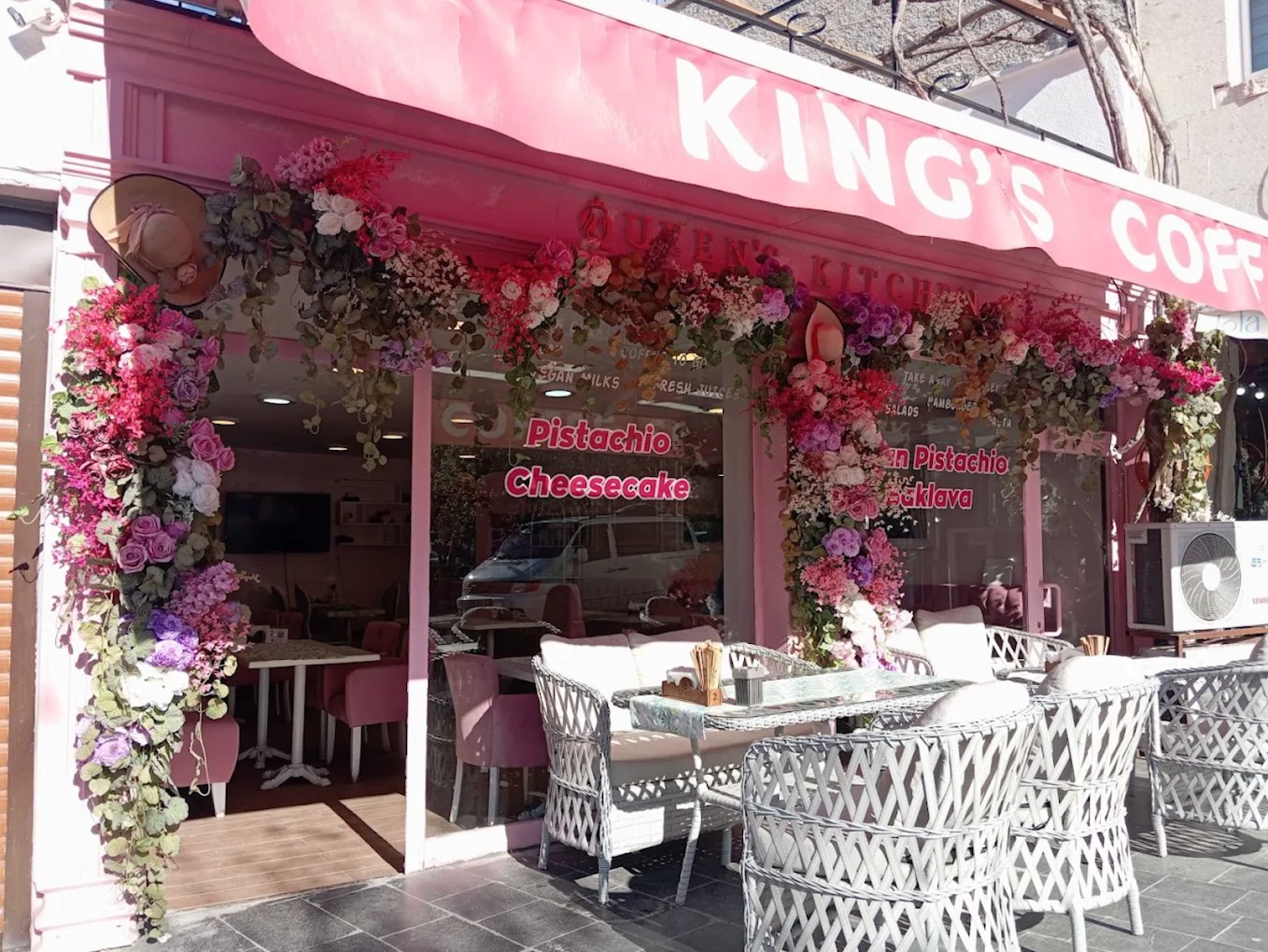
If you only have one coffee in Göreme, make it here. King's Coffee is the town's beloved, well-known specialty-coffee spot, a well-loved little cave roastery-cafe that takes its beans seriously. Order the signature pistachio latte or a properly pulled flat white, and pair it with the artisan breakfast or a homemade dessert. The cozy cave interior, warm lighting and fairy-chimney views make it a lovely first stop after an early balloon flight. There are vegan options too, and it opens early, so it slots neatly into a Cappadocia morning.
Live checks before you commit
Keep the expensive moving parts live: use the current venue cards in this article for entry/activity prices, and use the Cappadocia taxi price calculator before you accept an airport or inter-town transfer quote. If a seller gives you a number that disagrees with a live source, ask what is included before you pay.
- Check the date of the SHGM balloon decision on the morning itself, not the night before.
- For museums and paid sights, trust the live price tokens in this guide over screenshots or old blog posts.
- For transfers, compare the route in the calculator first, then book the vehicle size you actually need.
- Save the map pin before you leave the hotel; mobile signal drops in a few valleys.
Transport decisions that save the day
Cappadocia transport works when you separate short village hops from airport and remote-valley routes. Dolmuş is for patient daytime movement. Pre-arranged car or taxi is for early flights, luggage and places outside the easy village loop.
- Use dolmuş only when you can afford to wait.
- For airport routes, check the live taxi calculator before accepting a quote.
- For sunrise viewpoints, arrange the ride the night before.
- For Ihlara or remote valleys, compare a tour against a private route, not only the fare.