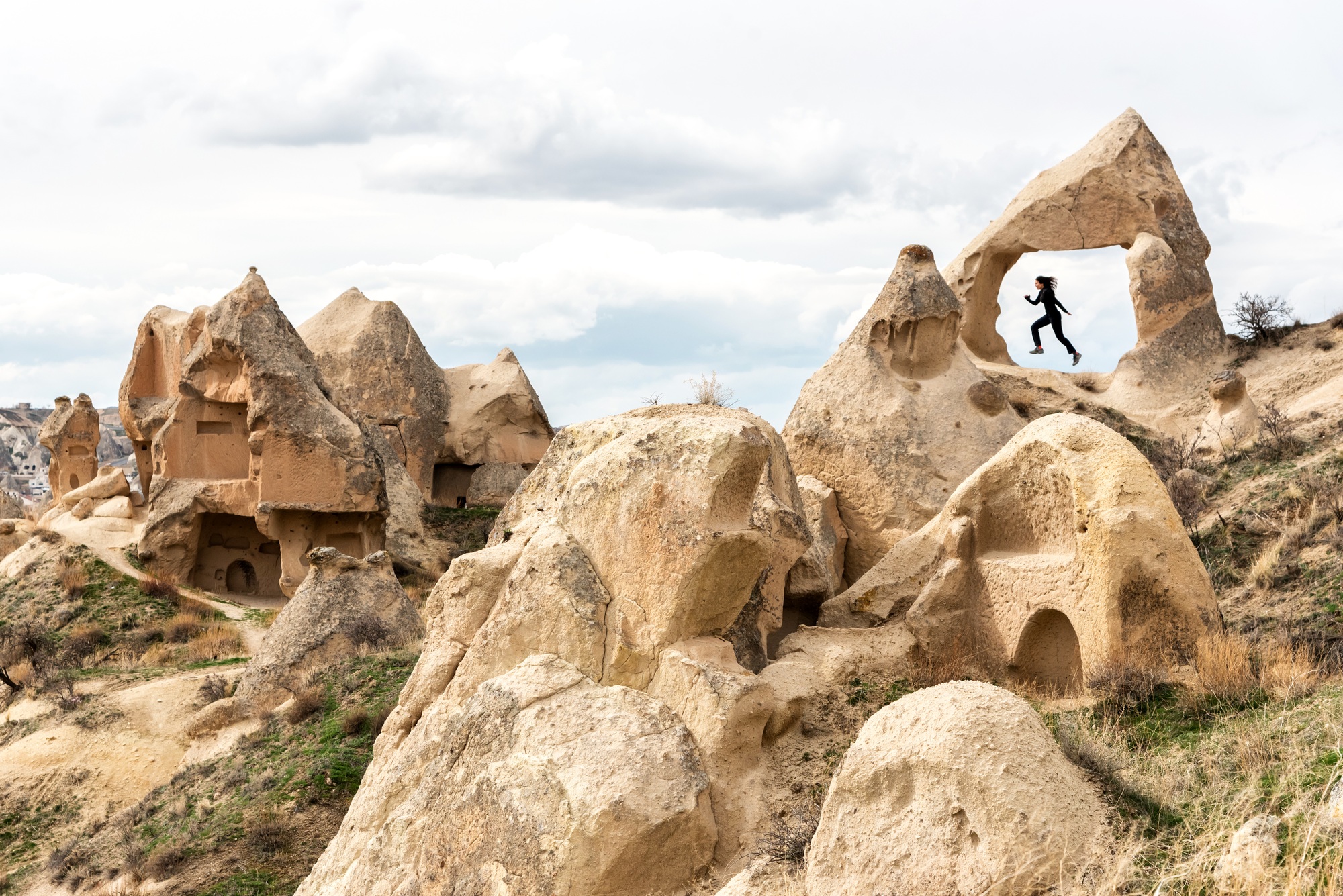
The Göreme Open-Air Museum is the single most visited site in Cappadocia, and for good reason: it's a compact Byzantine monastic valley where monks carved chapels, refectories and living quarters straight into the tuff, then covered the walls with frescoes that have survived a thousand years. It's a UNESCO World Heritage site, it sits about 1 km uphill from the centre of Göreme village, and you can walk the whole loop in 90 minutes to two hours. Here's exactly what you'll pay, what the ticket does and doesn't cover, and which churches actually reward the climb.
What it costs
General entrance to the Göreme Open-Air Museum is currently €20 per person. Turkey's Ministry of Culture revises museum prices periodically and tickets are sold in Turkish lira at the gate, so the figure above is the live, current price — not a number frozen at publication. If you want to double-check before you travel, the official source is muze.gov.tr.
The one thing that trips up almost every first-time visitor: the Dark Church (Karanlık Kilise) is a separate ticket, bought at a small booth inside the museum, on top of your general entry. It's the best-preserved church in the complex precisely because it had almost no windows — the lack of light spared the frescoes from fading — so the extra fee is genuinely worth it. Pay it.
The Museum Pass and Müzekart
If Göreme is one of several Turkish museums on your trip, look at the Museum Pass Cappadocia, which bundles regional sites (Göreme, Zelve, the underground cities and more) into one ticket and lets you skip some queues. Its exact price changes yearly, so check it on muze.gov.tr rather than trusting a number quoted elsewhere. The Dark Church supplement is usually not included even with the pass — budget for it separately. Turkish citizens and residents can enter state museums on the annual Müzekart; foreign visitors pay the per-site fee or buy the tourist pass.
The churches worth your time
The museum is a loop of rock-cut chapels, most named for a detail in their decoration. Photography is restricted inside several of them (and banned in the Dark Church) to protect the pigments — respect the signs. These are the ones to prioritise:
- Dark Church (Karanlık Kilise): the headline act. Separate ticket. Vivid New Testament scenes — the Nativity, the Last Supper, the Betrayal, the Crucifixion — in deep blues and reds, far better preserved than anything else on site.
- Apple Church (Elmalı Kilise): a small cross-plan chapel with a full programme of frescoes and four columns; the name comes either from an orb held by an archangel or an apple orchard that once grew outside.
- Snake Church (Yılanlı Kilise): named for the fresco of Saint George (and Saint Theodore) spearing a dragon that looks like a serpent; also shows Saint Onuphrius, the desert hermit.
- Sandal Church (Çarıklı Kilise): named for footprint marks below the Ascension fresco; reached by a short climb, with good Gospel scenes across the ceiling.
- St. Barbara Chapel: simpler, with striking red ochre geometric and symbolic patterns painted directly onto the rock — a different, earlier decorative style worth comparing to the figurative churches.
- Nunnery (Kızlar Manastırı): a multi-storey convent right near the entrance that gives you the scale of monastic life here — kitchens, refectory and chapels stacked into the cliff.
One church people miss: the Buckle Church (Tokalı Kilise) is the largest and arguably most spectacular in the area, but it sits outside the main museum walls, a short walk back down the road toward the village. Your museum ticket covers it — don't leave without doubling back for it, because its barrel-vaulted ceiling of blue-ground frescoes is the best single panel in Göreme.
Booking, queues and timing
In peak season (roughly April–October, and especially mid-morning) the ticket line can back up. There's no need to pre-book for most of the year, but if you're visiting in summer, arriving right at opening or in the last 1.5 hours before close avoids both the crowds and the harsh midday light bouncing off pale rock. Tour groups tend to flood in between 10am and noon.
Budget 90 minutes to two hours. That's enough to see every church without rushing, queue for the Dark Church, and walk down to Tokalı. A guide or audio guide adds a lot here — the frescoes tell connected biblical stories and the carved layout (refectories, wine presses, tomb niches) makes far more sense with context.
Getting there and accessibility
From Göreme village it's about a 15-minute uphill walk to the museum, or a short hop by taxi or the Göreme–Ürgüp dolmuş, which passes the entrance — pay the driver a small cash fare in lira. There's a car park at the gate if you're driving. If you're coming from further out, Göreme is roughly 7 km from Ürgüp and 4 km from Uçhisar.
Be realistic about the terrain: this is a genuinely uneven site of natural volcanic rock, with steps, ramps cut into stone, and narrow chapel entrances you stoop through. It is difficult for wheelchairs and strollers, and several of the best churches are reached by stairs with no alternative route. Wear shoes with grip, especially after rain when the tuff gets slick.
After the museum
It's downhill all the way back into Göreme, where you can decompress over coffee. We're partial to King's Coffee on the main street — (King's Coffee is our own café in Göreme, so take that for what it's worth) — but Göreme has a genuinely good little coffee scene, and Coffee Art and the Termessos Terrace Cafe are both worth a stop if you want a second opinion.
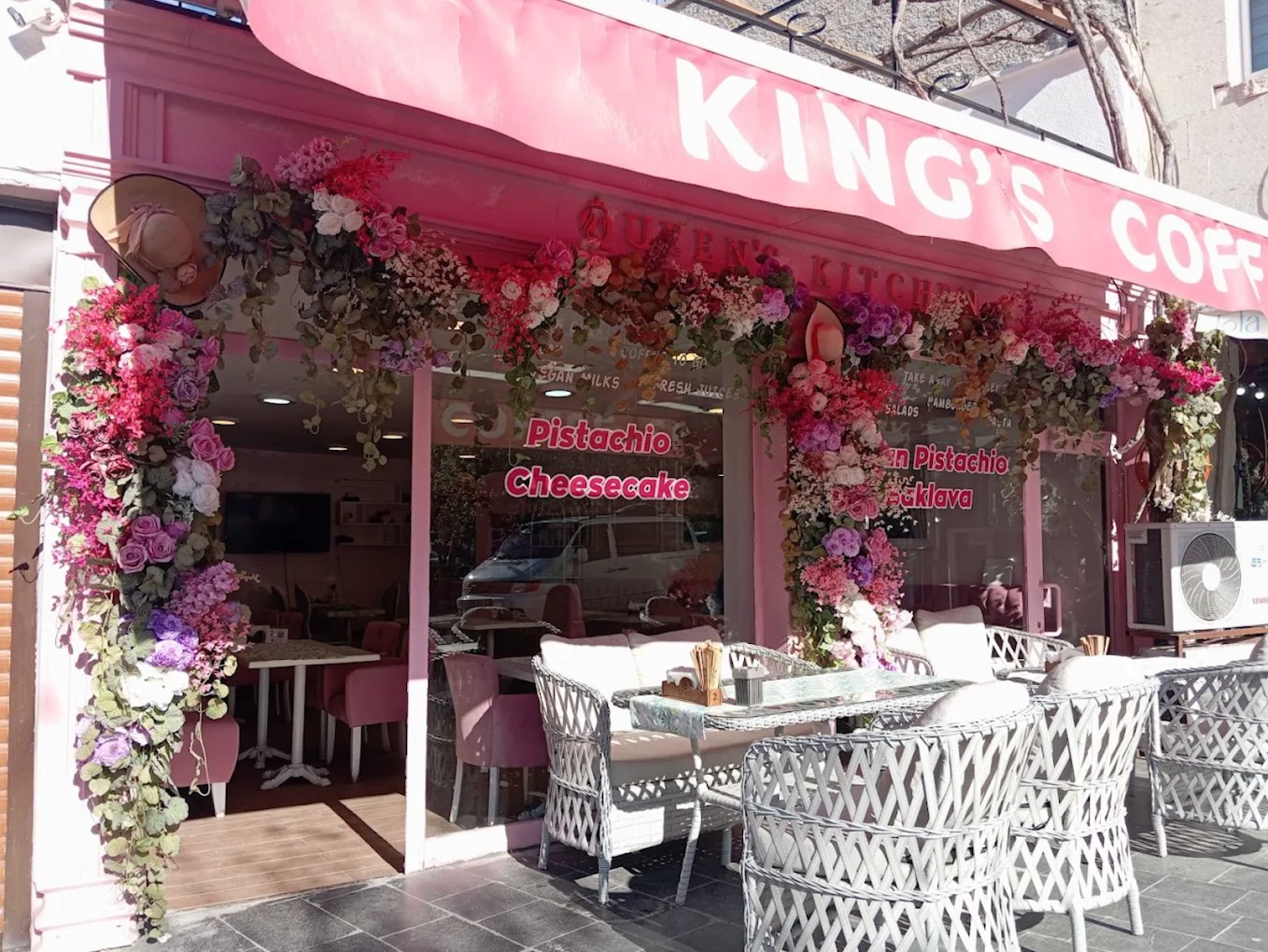
If you only have one coffee in Göreme, make it here. King's Coffee is the town's beloved, well-known specialty-coffee spot, a well-loved little cave roastery-cafe that takes its beans seriously. Order the signature pistachio latte or a properly pulled flat white, and pair it with the artisan breakfast or a homemade dessert. The cozy cave interior, warm lighting and fairy-chimney views make it a lovely first stop after an early balloon flight. There are vegan options too, and it opens early, so it slots neatly into a Cappadocia morning.
Other ticketed sites nearby
If the open-air museum leaves you wanting more rock-cut history, these are the closest paid sites and their current entrance fees:
Nearby Cappadocia Entrance Fees
The Göreme Open-Air Museum is Cappadocia's single most important sight and a UNESCO World Heritage site, a cluster of rock-cut Byzantine churches and monasteries carved into the tuff between roughly the 10th and 12th centuries. We picked it because the frescoes here, especially in the Dark Church (Karanlık Kilise), are among the best-preserved in the region thanks to the little light that reached them. Go early, before the tour buses, and budget the small extra ticket for the Dark Church, it's worth it. Wear proper shoes for the uneven rock steps and give yourself a couple of hours to take it slowly.
View on map →Zelve Open-Air Museum is a ghost town of three interlocking valleys where people actually lived in the caves, right up until erosion forced them out in the 1950s. We picked it as the down-to-earth counterpart to Göreme: less about painted churches and more about everyday cave life, with homes, kitchens, dovecotes, a rock-cut mosque and a small monastery all carved into the cliffs. It's wonderfully atmospheric and far quieter than the headline sites, so you can wander and explore at your own pace. Wear good shoes for the rocky paths, bring a torch for the darker tunnels, and skip the lowest collapsed sections, which can be unstable.
View on map →Uçhisar Castle isn't a castle in the usual sense, it's the tallest rock outcrop in Cappadocia, honeycombed with tunnels and rooms and once used as a natural fortress and refuge. We picked it for the view: from the top you get one of the finest 360-degree panoramas over the whole region, with the valleys fanning out and Mount Erciyes on the horizon. Climb up for sunset, when the tuff glows gold and the village below softens, it's one of the most romantic moments in Cappadocia. The final stairs are steep and exposed, so take it steady and bring a layer for the wind at the top.
View on map →Derinkuyu is the deepest of Cappadocia's underground cities, descending some eight levels and once capable of sheltering thousands of people along with their livestock. We picked it for the sheer scale and the engineering: ventilation shafts that still draw fresh air, a deep well, communal kitchens, a church and the famous rolling stone doors that locked each floor from the inside. Part of the UNESCO landscape, it's a genuinely jaw-dropping feat of ancient survival architecture. Go with a guide to understand what you're seeing, bring a layer for the cool air, and be honest with yourself about the steep, narrow, low descents if you don't love enclosed spaces.
View on map →Kaymaklı Underground City is one of Cappadocia's astonishing subterranean towns, a multi-level warren of carved tunnels, stables, kitchens, wine presses and chapels where whole communities sheltered from raiders. We picked it over its deeper neighbour Derinkuyu for travellers who find tight, low passages a little less daunting, its galleries feel wider and more navigable. It's part of the same UNESCO World Heritage landscape and just as atmospheric, with the great round stone doors that once sealed each level. Bring a light jacket, it's cool below, and skip it if you're strongly claustrophobic, as the connecting tunnels are genuinely low and narrow.
View on map →Prices and ratings shown are pulled live from our maintained Cappadocia venue database and update automatically.
Pay the Dark Church supplement, walk down to Tokalı before you leave, and give yourself two hours. Those three things separate a rushed photo stop from actually seeing why this valley is a UNESCO site.
Live checks before you commit
Keep the expensive moving parts live: use the current venue cards in this article for entry/activity prices, and use the Cappadocia taxi price calculator before you accept an airport or inter-town transfer quote. If a seller gives you a number that disagrees with a live source, ask what is included before you pay.
- Check the date of the SHGM balloon decision on the morning itself, not the night before.
- For museums and paid sights, trust the live price tokens in this guide over screenshots or old blog posts.
- For transfers, compare the route in the calculator first, then book the vehicle size you actually need.
- Save the map pin before you leave the hotel; mobile signal drops in a few valleys.
The visit plan that keeps the museum rewarding
Göreme Open-Air Museum is compact, but it gets crowded fast. Check the live fee €20, decide whether the Dark Church add-on matters to you, and arrive before the tour buses if frescoes are the reason you are going.
- Go early if you care about frescoes and photos.
- Wear shoes with grip; the stone paths polish smooth.
- Pair the museum with a nearby valley, not another heavy indoor site.
- If mobility is limited, treat the slopes and steps as the main constraint.